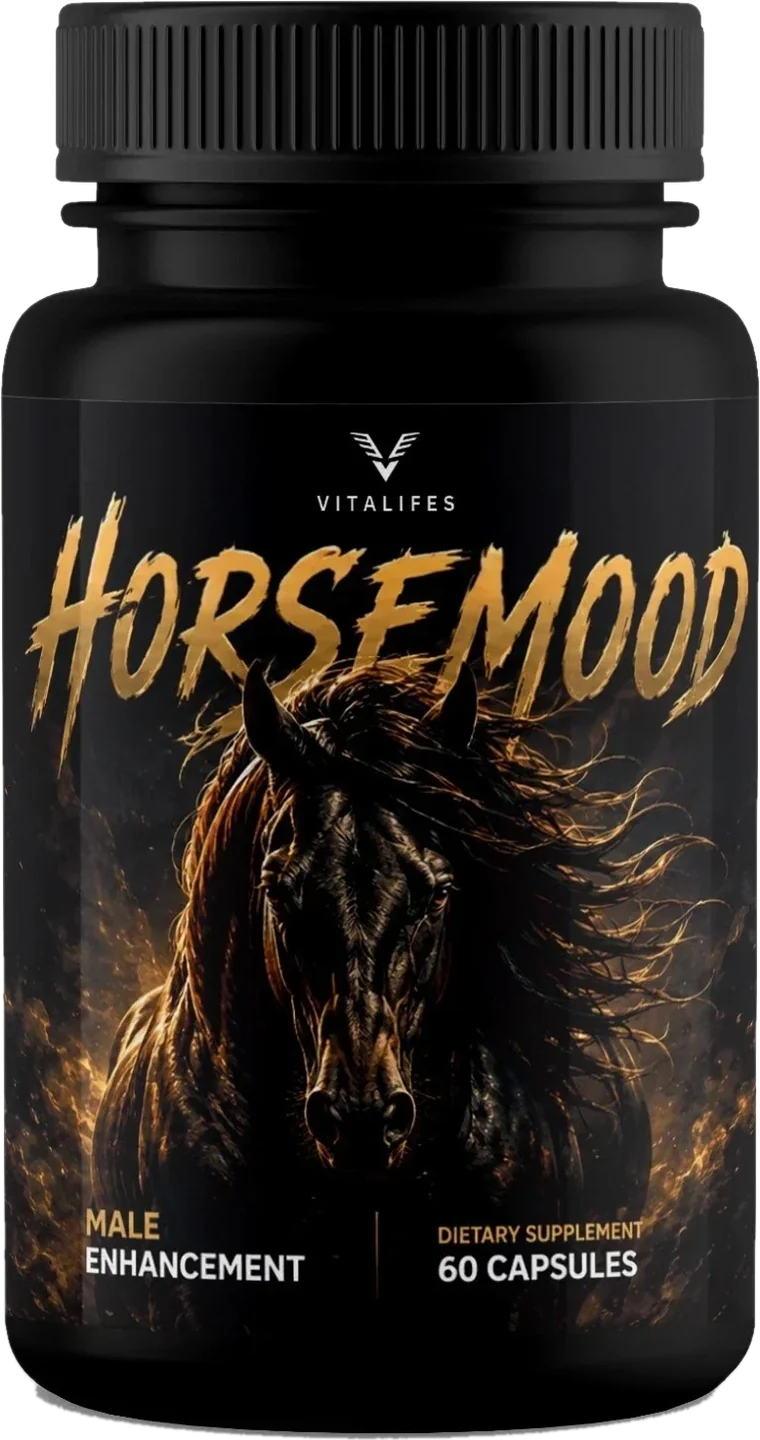
Tongkat Ali in HorseMood: what the human trials actually measured
The label says “Tongkat Ali Powder.” The clinical literature is mostly built on a different form, at doses that are printed in the papers but not on the bottle. Here is what the trials tested and where the label leaves a gap.
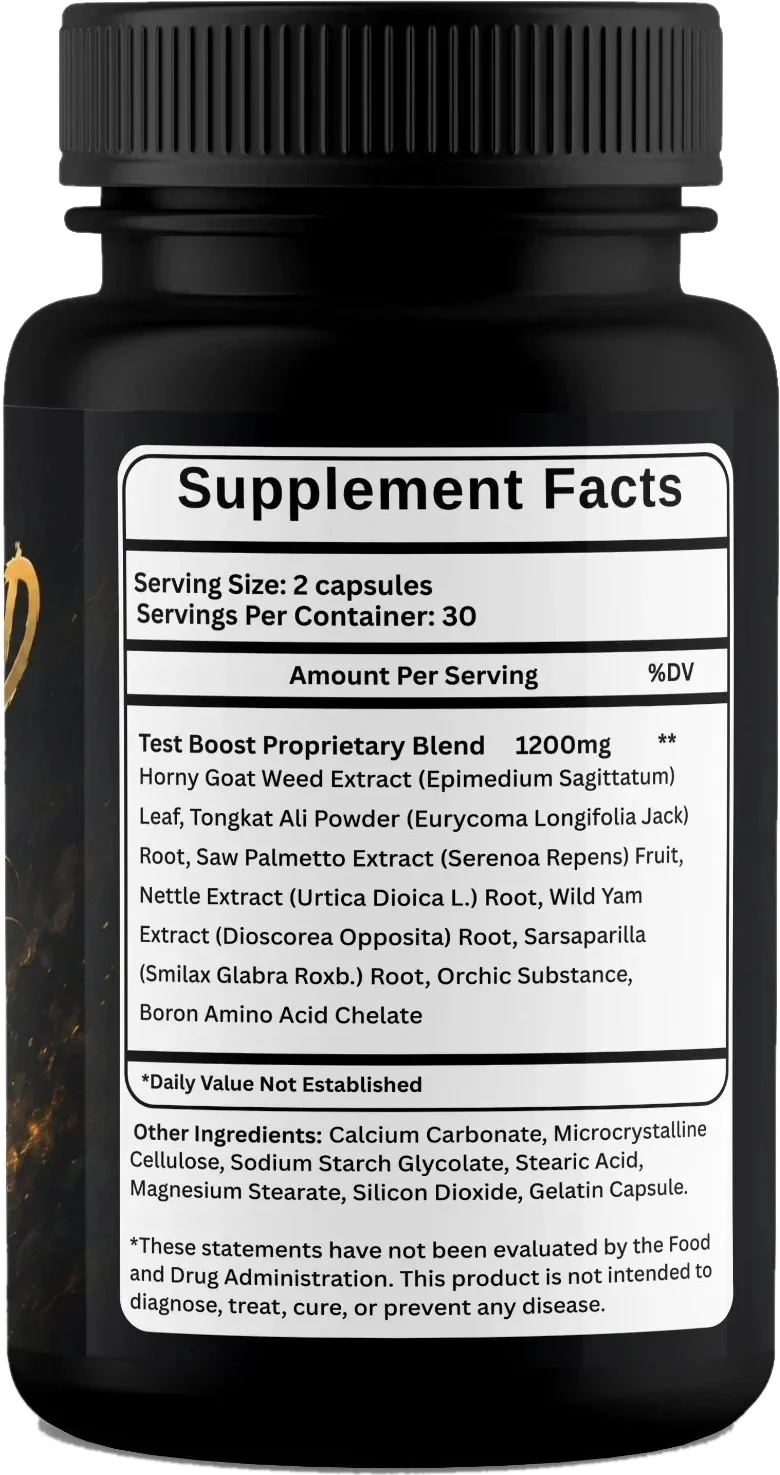
HorseMood’s Supplement Facts panel lists eight ingredients inside a single 1,200 mg Test Boost Proprietary Blend, and the second one printed is Tongkat Ali Powder (Eurycoma Longifolia Jack) Root. Like every other ingredient in that blend, the label gives a total for all eight together and no individual milligram figure for tongkat ali on its own. That is not unusual for a proprietary blend, and it is not this article’s subject. This article is about the other half of the question: when researchers have actually tested tongkat ali on people, what did they use, what did they measure, and how far does that reach toward a capsule that doesn’t say how much of it you’re getting.
Tongkat ali is the common Malay name for Eurycoma longifolia, a rainforest shrub native to Indonesia, Malaysia, Thailand, and Vietnam, also sold as “longjack.” Its root has a long history in traditional Malay and Indonesian medicine as a general tonic, and it has become one of the more heavily studied botanicals in the men’s-health supplement category over the last fifteen years, mostly using proprietary standardized extracts developed by a small number of ingredient suppliers rather than raw root powder.
How the wild plant becomes a supplement ingredient
Almost none of the tongkat ali sold in supplements is farmed at scale the way, say, turmeric or ginger is. Most of the world’s commercial supply is still wild-harvested from forest understories in Malaysia and Indonesia, which is part of why the plant has been flagged in regional conservation discussions and why supply quality can vary more than it would for a cultivated crop. Two things happen to a harvested root before it reaches a capsule. It can be dried and milled into a plain root powder, which is what a label reading “Tongkat Ali Powder” describes, or it can be processed into a water or alcohol extract and then further standardized so that a lab assay confirms a minimum percentage of a marker compound — most often eurycomanone, one of the quassinoid compounds native to the root. A standardized extract carrying a name like the two used in published research is typically concentrated many times over compared with the same weight of plain powder, precisely so that a small, defined milligram amount can be assayed and reproduced batch to batch. That distinction, powder versus standardized extract, is the single most important thing to hold onto before reading any tongkat ali research, because it is the difference between a dose you can compare across studies and one you cannot.
What the trial evidence actually says
Three studies are worth walking through in some detail, because between them they cover the three kinds of claims tongkat ali gets marketed on: raising testosterone in general, lowering stress hormones, and doing both at once in younger men.
1. The 2022 systematic review and meta-analysis
Leisegang and colleagues pooled five randomized controlled trials of Eurycoma longifolia supplementation and looked specifically at total testosterone as the outcome, publishing the result in Medicina in 2022.[1] Across the pooled data, from both healthy volunteers and men with diagnosed hypogonadism (clinically low testosterone), the random-effects model found a statistically significant increase in total testosterone associated with E. longifolia supplementation. A meta-analysis is only as good as the trials that feed it, and five trials with different extracts, doses, and durations is a modest base to generalize from — the authors themselves frame it as encouraging rather than conclusive, and call for larger, more standardized trials. But it is the closest thing this ingredient has to a summary verdict, and the direction of the pooled effect is positive.
2. The 2013 stress-hormone trial
Talbott and colleagues ran a randomized, double-blind, placebo-controlled trial in 63 adults (32 men and 31 women) who screened as moderately stressed, published in the Journal of the International Society of Sports Nutrition.[2] Subjects took 200 mg per day of a standardized hot-water tongkat ali root extract, or placebo, for four weeks. The measured outcomes were salivary cortisol, salivary testosterone, and the Profile of Mood States questionnaire. The tongkat ali group showed a 16% reduction in cortisol exposure and a 37% improvement in a testosterone-status measure relative to placebo, alongside self-reported reductions in tension, anger, and confusion. This is a genuinely useful design because it separates a stress-hormone effect from a pure testosterone effect, but it is a small, short, mixed-sex sample, self-reported mood scoring is inherently subjective, and it used one specific proprietary hot-water extract at a fixed 200 mg dose — not tongkat ali in general.
3. The 2021 young-males trial
A separate placebo-controlled, double-blind, matched-pairs study published in Andrologia in 2021 gave 32 young men (average age about 24) either 600 mg per day of E. longifolia or placebo for two weeks.[3] Total testosterone, free testosterone, and estradiol all rose significantly in the treatment group relative to placebo, while luteinizing hormone, follicle-stimulating hormone, and sex-hormone-binding globulin did not change. The authors read the unchanged LH/FSH as evidence the effect isn’t running through the classic hypothalamic-pituitary-gonadal signaling loop, which is an interesting mechanistic note, but it is a two-week trial in healthy young men who did not have low testosterone to begin with — a different population from most people buying a “test boost” formula, and a much shorter window than most supplement users would actually take the product for.
The dose and form gap
Here is where the trial evidence and the HorseMood label stop lining up cleanly. Every trial above used a specific, named, standardized extract — a hot-water extract in the Talbott trial, a defined E. longifolia extract in the other two — at a stated daily dose (200 mg or 600 mg). Standardized extracts are concentrated and typically assayed for a marker compound (commonly eurycomanone) so that one batch delivers roughly the same potency as the next.
HorseMood’s own label does not describe its tongkat ali that way. It reads “Tongkat Ali Powder” — a plain root powder, not a named standardized extract — and it is one of eight ingredients sharing a single 1,200 mg total, with no individual amount printed for any of them. A root powder and a standardized water extract are not interchangeable in potency per milligram, and without a stated individual amount there is no way to know whether the tongkat ali powder in a given HorseMood capsule is anywhere close to 200 mg, let alone 600 mg, of an equivalent extract. That comparison simply is not available from what the label discloses, and this article isn’t going to invent a number to fill the gap.
The trials tell you what a specific, measured amount of a specific, named extract did in a specific group of people over a specific number of weeks. The label tells you tongkat ali is present, printed second in the order, inside a blend whose total weight is disclosed and whose individual ingredient weights are not. Those are two different, both-true facts, and neither one substitutes for the other.
What this does and doesn’t tell a buyer
It's reasonable to read the trial evidence above as a real reason tongkat ali is a common, plausible pick for a men’s formula — the pooled testosterone result, the cortisol result, and the young-males result all point the same direction, even with each individual study's limitations. It is not reasonable to read that evidence as a guarantee about what any specific capsule of any specific product will do, because none of those trials tested HorseMood, and the ingredient order on a Supplement Facts panel by itself does not tell you the dose. Descending order is a labeling requirement, not a dosing disclosure: it only confirms that horny goat weed extract (listed first) is present in an amount at least as large as tongkat ali (listed second), and so on down the list. It says nothing about whether any of those amounts individually reach the range used in the studies above.
If dose-matching to published research matters to you, the honest step is to look at what a specific product's supplement facts panel discloses, ingredient by ingredient, and ask the seller directly if you want more precision than a proprietary blend total provides. That question is a fair one to ask about any proprietary-blend product in this category, not just this one.
Common questions this research raises
Is more tongkat ali always better?
Not according to the literature that exists. None of the three studies above tested a wide dose-response range on the same population, so there is no published human data establishing that 600 mg outperforms 200 mg, or that either outperforms some other amount. The 600 mg trial and the 200 mg trial were different studies, in different populations, over different lengths of time, measuring overlapping but not identical outcomes. Treat any claim that a specific higher number is definitively better as marketing, not as something these three papers established.
How fast is it supposed to work?
The trials above ran two weeks and four weeks. Neither is long by supplement-research standards, and neither trial reported on what happens after the study period ended. There is no published human trial in this set, or located in the process of writing this article, that followed tongkat ali supplementation for six months or a year, which is the timeframe over which a lot of supplement users actually take a product like this continuously.
Does the blend's other ingredients change any of this?
Possibly, but not in a way any of the three cited trials can speak to, because none of them tested tongkat ali alongside horny goat weed, saw palmetto, nettle, wild yam, sarsaparilla, orchic substance, and boron in one combined formula. Combination products are common in this category precisely because individual ingredients are cheaper to test one at a time, but a combined-ingredient supplement is, strictly speaking, its own untested product until someone runs a trial on that exact combination at those exact amounts. HorseMood has not published such a trial, and as far as could be established for this article, none exists.
Safety and who should check with a doctor first
None of the trials cited here reported serious adverse events at the doses used, but none of them ran longer than a few months either, and none of them enrolled people who were pregnant, nursing, under 18, or managing a diagnosed medical condition — the same groups the HorseMood label itself flags to see a physician first. Tongkat ali is also sometimes discussed alongside other hormone-active supplements for potential additive effects, which is one more reason to mention everything you take, including this ingredient by name, to a doctor or pharmacist if you're on prescription medication. Nothing in the research above is a treatment, prevention, or cure claim for any condition, and none should be read as one.
The short version
Tongkat ali has more human trial data behind it than most ingredients in this category, including a 2022 meta-analysis pointing toward a real testosterone effect and two individual trials showing cortisol and testosterone changes at defined doses. HorseMood lists it as a plain root powder, second in a 1,200 mg blend of eight ingredients, with no individual amount disclosed. Both of those things are true at the same time, and the second one is exactly why this article can describe the research honestly without also telling you what dose is actually in the bottle — because the label doesn’t say, and neither will we.
What you can reasonably take from all of this: tongkat ali is not an obscure, untested filler ingredient. It is one of the more researched items on this particular label, the pooled human trial data leans positive on testosterone, and the plant's traditional use long predates the current wave of test-booster marketing. What you cannot take from it is any specific promise about this specific bottle, because a printed ingredient order and an undisclosed blend weight are not the same thing as a matched dose, and no marketing claim built on the studies above should be read as though it were.
References
- Leisegang K, Finelli R, Sikka SC, Panner Selvam MK. Eurycoma longifolia (Jack) Improves Serum Total Testosterone in Men: A Systematic Review and Meta-Analysis of Clinical Trials. Medicina (Kaunas). 2022. PMID: 36013514.
- Talbott SM, Talbott JA, George A, Pugh M. Effect of Tongkat Ali on stress hormones and psychological mood state in moderately stressed subjects. J Int Soc Sports Nutr. 2013;10:28. PMID: 23705671.
- Chan KQ, et al. The effect of Eurycoma Longifolia on the regulation of reproductive hormones in young males. Andrologia. 2021. PMID: 33559971.