Wild yam and orchic substance: the two ingredients with the thinnest research trail
Every ingredient on HorseMood's label gets marketing copy. Not every ingredient gets a published human trial. These two are the clearest examples of that gap, and it's worth understanding exactly where the evidence stops.
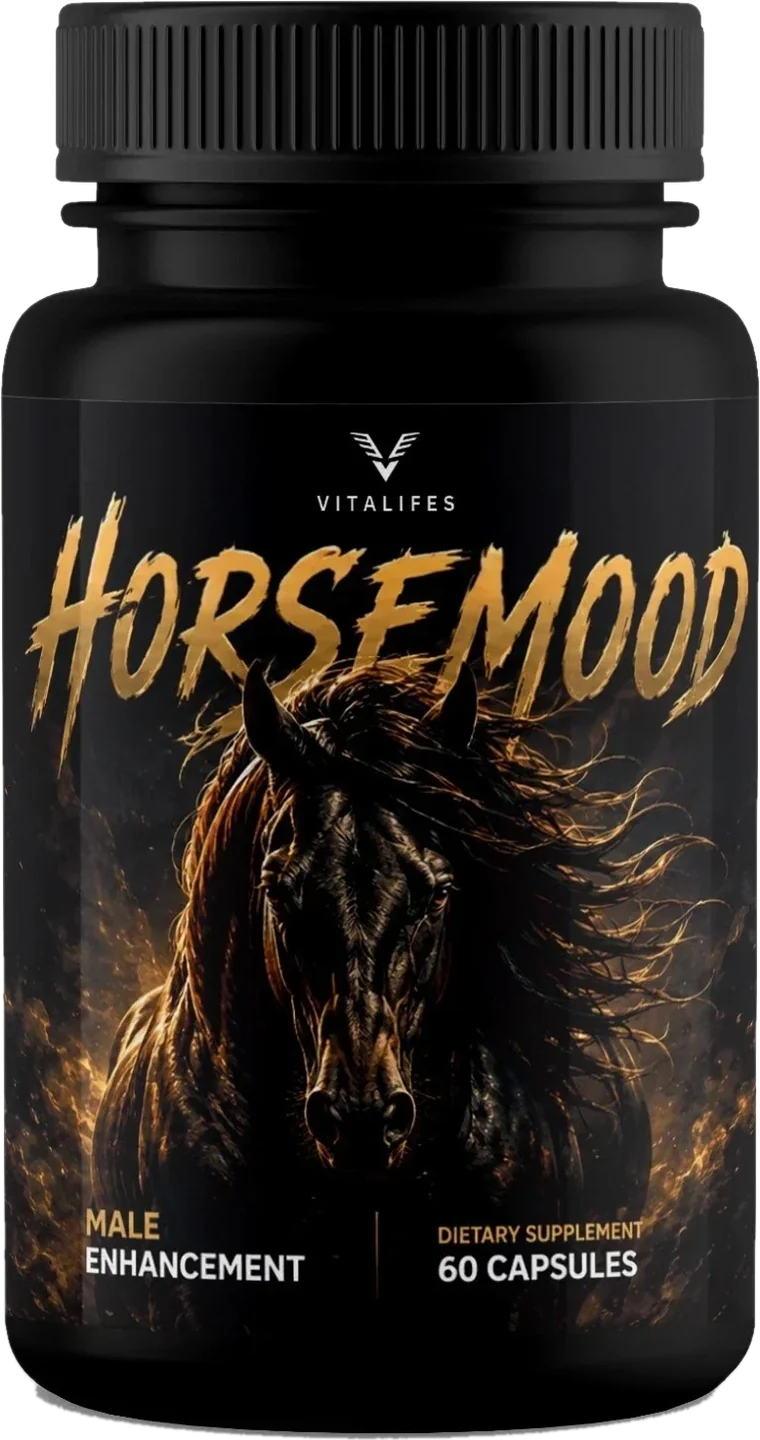
Most of the ingredient-focused writing about a men's supplement blend gravitates toward the two or three names with the most research behind them, because that's the more interesting story to tell. This article does the opposite on purpose. HorseMood's Supplement Facts panel lists Wild Yam Extract (Dioscorea Opposita) Root fifth in its 1,200 mg Test Boost Proprietary Blend, and Orchic Substance seventh, with no individual milligram amount printed for either — same as every other ingredient in the blend. Between them, these two ingredients have the thinnest published human research trail of anything on the label, and one of them is built on a specific biochemical claim that doesn't hold up under scrutiny. Both facts are worth knowing before deciding how much weight to put on either ingredient's presence in the formula.
Wild yam and the DHEA claim
Dioscorea species — wild yam — contain a steroidal saponin called diosgenin, and that single chemical fact is responsible for most of the marketing built around this ingredient. Diosgenin has a molecular structure close enough to steroid hormones that chemists can and do use it as a starting material to synthesize progesterone, DHEA (dehydroepiandrosterone), and other steroid hormones in a laboratory. That laboratory process is real, well documented, and historically significant — it's the basis of the Marker degradation process developed in the 1940s, which made large-scale hormone synthesis for early oral contraceptives commercially possible using wild yam as a raw material.
Where the marketing claim goes wrong is in the leap from "a chemist can convert diosgenin into DHEA in a lab, using specific reagents and reaction steps" to "your body converts diosgenin into DHEA when you swallow a capsule." Those are not the same process. The multi-step laboratory conversion requires chemical reagents and conditions that do not exist inside human digestion or metabolism, and the human body does not have the specific enzymes needed to carry out that conversion internally. The idea that oral or topical wild yam raises DHEA, progesterone, or testosterone levels in the body remains, on the available evidence, a claim that has not been demonstrated in humans — it persists because the laboratory chemistry is real and gets conflated with human physiology, not because a clinical trial has shown the conversion happening in people.
What the one relevant human trial actually found
The closest thing to a direct human test of this question is a double-blind, placebo-controlled, crossover trial by Komesaroff and colleagues, published in Climacteric in 2001.[1] Twenty-three healthy menopausal women used a topical wild yam cream, and the trial measured menopausal symptoms, lipids, and sex hormone levels. The result: short-term use of the topical extract was free of side effects but had little effect on menopausal symptoms, and the trial did not find the hormonal changes the marketing claims around wild yam would predict.
Two things about that trial are worth flagging honestly. First, it tested a topical cream in women, not an oral capsule in men, so it doesn't map directly onto how wild yam root is actually used in HorseMood — as a dried root extract taken by mouth by men. Second, a single 23-person trial testing one specific cream formulation is a limited evidence base either way, and it would be an overstatement to call it a definitive test of every wild yam product in every form. What it can fairly be used for is this: the one controlled human trial that actually measured sex hormone levels after wild yam exposure did not find the hormonal effect the ingredient is commonly marketed on, which is consistent with the biochemical reasoning above, and no trial located in the course of researching this article found the opposite in an oral, male population either.
Orchic substance: essentially no published human trial data
Orchic substance is a glandular extract — in commercial supplements, typically a freeze-dried or desiccated preparation made from bovine (cattle) testicular tissue. It has a long history in early-20th-century "glandular therapy," a movement built on the idea, common before modern endocrinology matured, that eating or taking an extract of an animal organ would support the same organ in the person consuming it. That idea predates the modern understanding of how hormones and digestion actually work, and it has not been validated as a general principle since.
For this specific article, a search of the published literature turned up no randomized controlled human trials evaluating orchic substance or bovine testicular extract supplementation — not for testosterone levels, not for symptoms of low testosterone, not for any other outcome. What limited information exists comes from broader, indirect sources: general data on the nutrient content of organ meats (orchic substance does supply zinc, selenium, vitamin B12, and cholesterol, the biological precursor to all steroid hormones, simply because those are present in glandular tissue generally), basic physiology of how the body processes ingested protein and cholesterol, and general safety guidance for bovine-derived supplement ingredients. None of that amounts to a clinical trial demonstrating that swallowing a capsule containing this ingredient raises a person's own testosterone, improves a symptom, or does anything measurably different from a comparable multivitamin containing the same trace nutrients from a non-glandular source.
That absence of evidence is not the same as evidence of harm, and it's not being presented as a hidden scandal — orchic substance is a longstanding, openly disclosed ingredient in this and many similar formulas, not something manufacturers are trying to obscure. It's simply an ingredient this article can't responsibly attach a research citation to, because the citation doesn't exist to attach.
Where the idea behind orchic substance actually comes from
Glandular therapy has a specific origin point worth knowing. In 1889, the French physiologist Charles-Édouard Brown-Séquard reported self-administering an extract made from animal testicular tissue and described feeling rejuvenated afterward — a report that predates the discovery of testosterone itself by decades and that modern endocrinologists generally attribute to a placebo response rather than any active hormonal effect, since crude glandular extract of that era could not have delivered a meaningful dose of a hormone nobody had yet identified or isolated. That single, uncontrolled 19th-century self-report nonetheless helped launch a commercial glandular-extract industry that persisted well into the 20th century, and modern orchic-substance ingredients trace their marketing lineage directly back to it. The scientific understanding of hormones has moved on enormously since 1889; the marketing language around glandular extracts, in places, has not moved on quite as far.
What both ingredients mean for a vegetarian or vegan buyer
Orchic substance is explicitly animal-derived, and HorseMood's own materials already disclose this: the ingredient comes from animal glands, and the capsule shell itself is gelatin, also animal-derived. Wild yam is plant-derived and carries no such flag. Anyone avoiding animal products for dietary, religious, or ethical reasons needs to know about the orchic substance and the gelatin capsule specifically — wild yam's presence in the same blend doesn't change that calculation either way.
Common questions this raises
If there's no human trial, does that mean orchic substance doesn't do anything?
It means nobody has published a controlled human study establishing that it does. Those are different statements. Absence of published evidence is not the same as evidence of no effect — it's possible a well-designed trial would eventually find something, and it's equally possible it would confirm no measurable benefit over a placebo. What can be said honestly today is that the claim rests on tradition and indirect reasoning about nutrient content, not on a clinical trial, and any marketing that implies otherwise is overstating what's actually been shown.
Why would a formula include an ingredient with no human trial data at all?
Because a proprietary blend is a marketing and formulation decision, not a research program. Ingredients get included for a mix of reasons — traditional use, category convention, differentiation from competitors, supplier availability — and clinical trial support is only one input among several, not a requirement. That's true across most of this product category, not unique to this formula, and it's exactly why an ingredient-by-ingredient look matters more than reading a blend's total weight or ingredient count alone.
Does traditional use count for anything?
It counts as a reason an ingredient earned a long history of use and a plausible starting point for research — it doesn't substitute for the research itself. Wild yam's traditional use in Chinese and East Asian food and herbal practice is well documented and real. That history explains why it was a candidate worth testing. It doesn't change what the one relevant controlled human trial on hormone effects actually found, or the fact that orchic substance has not yet been tested in a controlled human trial at all.
What this means for reading the rest of the label
Every ingredient on a Supplement Facts panel earns its place differently. Some, like the two covered in the companion articles on this blog, have real randomized human trial evidence behind them, of varying quality and consistency. Wild yam has one relevant human trial, using a form and population that doesn't match how it's actually used here, plus a widely repeated marketing claim that the available chemistry and that one trial both argue against. Orchic substance has essentially no published human clinical evidence at all, positive or negative — only historical use and indirect nutritional reasoning. Both are still printed on the label, in their real amounts as part of the undisclosed 1,200 mg blend total, because a proprietary-blend supplement is allowed to include ingredients at whatever evidentiary stage they're at, from well-studied to essentially untested, without distinguishing between them on the panel itself.
That's not a defect unique to HorseMood; it's how the proprietary-blend category works across the board. But it is exactly why an ingredient-by-ingredient look like this one is more informative than reading the blend total alone. Two ingredients with a combined trial count of one small, imperfectly matched study, and zero human RCTs respectively, are sitting on the same label, at the same undisclosed weight class, as ingredients with genuine meta-analyzed trial data behind them. The label doesn't distinguish between the two categories. This article is the distinction.
None of this is a claim that wild yam or orchic substance are unsafe at the amounts typically used in a formula like this one. No trial reviewed for this article, and no safety data located in the course of researching it, flagged either ingredient as dangerous at typical supplement doses. The concern this article raises is narrower and more specific than a safety warning: it's that the evidentiary basis for any performance or hormonal claim attached to these two ingredients is materially weaker than the basis for claims attached to some of the blend's other ingredients, and a buyer comparing products on the strength of their ingredient lists deserves to know that distinction rather than assume every name on a Supplement Facts panel carries the same weight of proof behind it.
That's also why this article, like its companion pieces on this blog, doesn't end with a verdict on whether to buy the product. The research on each ingredient is what it is, documented above with its sources, and the printed label is what it is, with the gaps it has. What you do with the combination of those two facts is a decision this article can inform but shouldn't make for you.
If you want to check any of this yourself, both PubMed and the free full-text archive at PubMed Central are open to the public, and searching an ingredient's scientific name alongside a word like "randomized" or "trial" is usually enough to find out quickly whether a name on a label has real human evidence behind it, thin evidence, or none at all. It takes a few extra minutes, and for an ingredient list this short, it's a genuinely manageable amount of reading for anyone deciding what to put in their body long-term.
References
- Komesaroff PA, Black CVS, Cable V, Sudhir K. Effects of wild yam extract on menopausal symptoms, lipids and sex hormones in healthy menopausal women. Climacteric. 2001;4(2):144-150. PMID: 11428178.